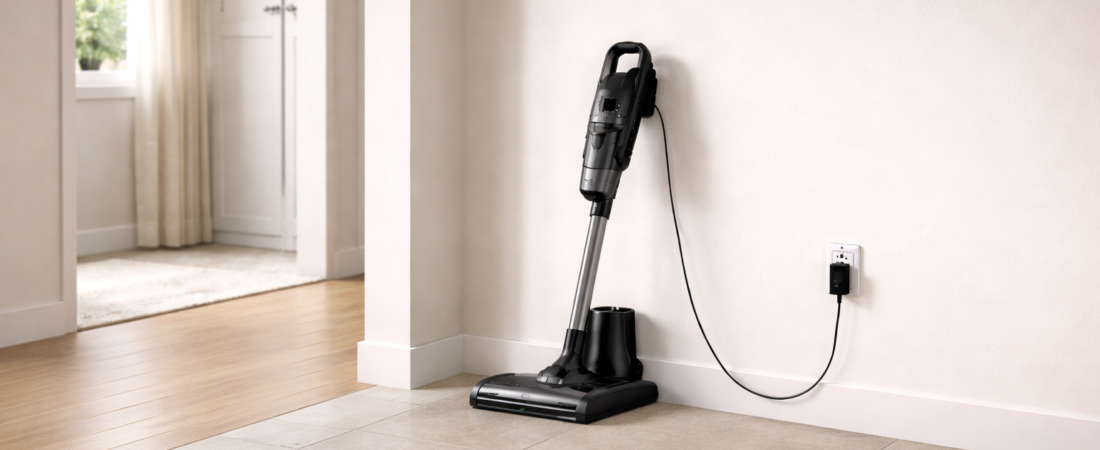
When a vacuum charger is plugged in but the battery does not charge, the issue is not always the battery itself. In many cases, the charger is supplying incorrect power, has failed internally, or is incompatible with the vacuum’s charging system.
This page explains the most common reasons a vacuum charger will not charge the battery and how to identify whether the charger is the problem.
How Vacuum Chargers Are Supposed to Work
A vacuum charger converts household electricity into a specific voltage and current required by the battery. If the charger does not meet those requirements, the vacuum may show no charging lights, intermittent charging, or stop charging altogether.
For charging to work correctly:
-
Voltage must match exactly
-
Polarity must be correct
-
The charger must supply sufficient current (amperage)
If any one of these is wrong, charging may fail.
Common Reasons a Charger Will Not Charge the Battery
Charger Output Voltage Is Incorrect
If the charger voltage is too low, the battery will not charge.
If it is too high, the vacuum’s internal protection may block charging entirely.
This often happens when:
-
A replacement charger was purchased without checking specifications
-
A “close enough” charger was used
-
A universal charger was incorrectly set
Voltage mismatch is one of the most common causes of charging failure.
Charger Has Failed Internally
Vacuum chargers can fail even if they appear normal from the outside.
Signs of internal failure include:
-
No indicator light on the charger
-
Charger becomes unusually warm
-
Charging starts but stops after a few seconds
Internal components degrade over time, especially with frequent unplugging or power surges.
Incorrect Connector or Loose Fit
If the charger plug does not fit snugly:
-
Power may disconnect intermittently
-
Charging may only occur in certain positions
-
The vacuum may not detect the charger at all
Connector size and shape must match exactly. Similar-looking plugs are not always electrically compatible.
Battery Is Fully Depleted or Faulty
If a battery has been fully discharged for a long period, some chargers will not initiate charging. In other cases, an ageing battery may no longer accept charge even if the charger is working correctly.
This can look identical to a charger failure, which is why testing specifications first is important.
How to Tell If the Charger Is the Problem
The charger is likely the issue if:
-
The vacuum works when charged on another compatible charger
-
The charger output does not match the vacuum’s required voltage
-
The charger indicator behaves inconsistently
If possible, comparing the charger output rating to the vacuum’s requirements is the fastest way to rule the charger in or out.
Should You Replace the Charger or the Battery?
If the charger voltage or connector is incorrect, replacing the charger is usually the correct step.
If the charger matches specifications but charging still fails, the battery may be at fault. Replacing both without testing often leads to unnecessary expense.
Summary
A vacuum charger not charging the battery is often caused by incorrect voltage, failed charger components, or poor connector fit. Guessing is the most common mistake.
Confirming charger specifications before replacing parts reduces the risk of buying incompatible chargers and damaging the vacuum or battery.
For more information , see our Vacuum Charger Replacement Guide